Affichage des articles dont le libellé est Croatie. Afficher tous les articles

16.7.18

Coupe du Monde. Et soudain, on découvre le « fascisme croate »


Au fur et à mesure que la Croatie avançait dans la Coupe du Monde des articles ont commencé à pointer les incidents répétés de la part de certains supporters et joueurs croates impliquant des gestes et actes nationalistes, voire de revendication du fascisme. Entre montée de l’extrême droite et amalgame, comment peut-on expliquer la banalisation du symbolisme nationaliste d’origine fasciste ?

Philippe Alcoy

10.6.16

The Labor Movement in Post-Communist Countries


Interviewed by Philippe Alcoy

We interviewed Mihai Varga, a Romanian specialist on trade unionism in Eastern and Central Europe and author of "Worker Protests in post-communist Romania and Ukraine," published in August 2015. In this interview, Varga provides his vision on the state of the trade unionism in the region after the dissolution of the Soviet bloc in the early 1990's.

20.5.16

Interview. Qu’en est-il du syndicalisme dans l’Europe « postsocialiste » ?


Propos recueillis par Philippe Alcoy
 
Révolution Permanente a interviewé Mihai Varga, spécialiste roumain du syndicalisme en Europe Centrale et de l’Est et auteur du livre « Worker Protests in post-communist Romania and Ukraine » (Luttes ouvrières dans la Roumanie et l’Ukraine postcommuniste) paru en août 2015. Il nous livre sa vision de la scène syndicale dans la région, après la dissolution du « bloc soviétique », au début des années 1990. Une réflexion intéressante qui peut nous aider à comprendre la situation actuelle de la classe ouvrière dans ces pays mais aussi à tirer des leçons pour l’action syndicale dans les pays occidentaux où le patronat et les gouvernements sont à l’offensive contre les droits et acquis de la classe ouvrière.

3.3.16

Mass mobilization, political crisis and capitalism in Eastern Europe


Philippe Alcoy

Many of the capitalist regimes in Eastern Europe have faced continued instability as they are challenged by mass movements from below. What is the historical background to these struggles and what are the challenges and limits of these movements?

22.2.16

Hladno Pivo : quand le hard-rock croate chante le drame des privatisations et des fermetures d’usines


Philippe Alcoy
En Europe de l’Est le processus de restauration du capitalisme initié au début des années 1990 a entrainé un lot de destruction de postes de travail, de privatisations et de fermetures d’entreprises. A sa manière le groupe musique croate Hladno Pivo exprime cette réalité à travers de sa chanson « Fima », parue en avril 2015.

25.1.16

Yugoslavia after Capitalist Restoration


Philippe Alcoy

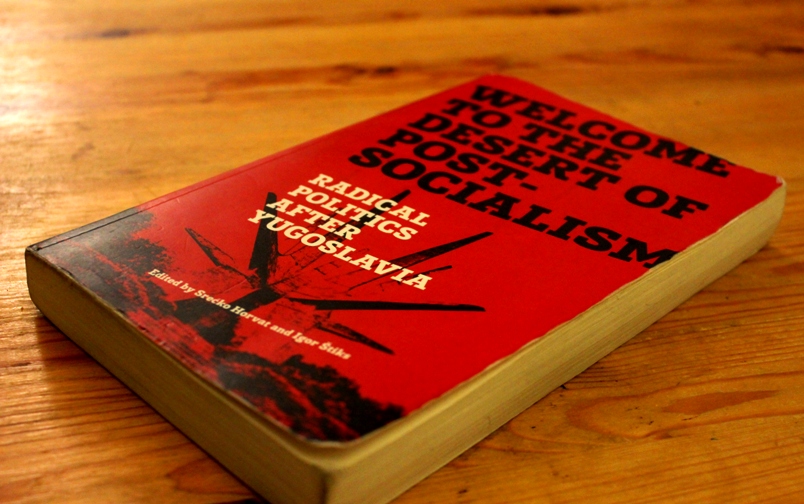
Released in January 2015 by Verso Books, Welcome to the Desert of Post-Socialism: Radical Politics after Yugoslavia is a collective work coordinated by two of the best-known leftist intellectuals in the region, Croatian Srećko Horvat and Bosnian Igor Štiks. The book aims to break down certain prejudices that weigh on Eastern Europe and especially in the Balkans after the collapse of the USSR and the disappearance of the "socialist bloc," in an effort to re-think "radical politics" for this part of the continent.

7.1.16

Pour penser des « politiques radicales » dans les Balkans. A propos du livre "Welcome to the Desert of Post-Socialism – Radical Politics After Yugoslavia"


Philippe Alcoy
Publié le 4 janvier 2016
 
Paru en janvier 2015 chez Verso Books, Welcome to the Desert of Post-Socialism – Radical Politics After Yugoslavia est un ouvrage collectif coordonné par deux des plus connus intellectuels de gauche dans la région, le croate Srecko Horvat et le bosnien Igor Štiks. L’objectif du livre est de briser certains préjugés qui pèsent sur l’Europe de l’Est et particulièrement sur les Balkans après l’effondrement de l’URSS et la disparition du « bloc socialiste » et de penser des « politiques radicales » pour cette partie du continent. Comme ses éditeurs l’affirment dans l’introduction : « ces régions ont été vues comme une cause perdue pour le développement de processus progressistes après 1989 et seulement vouées à des politiques de droite et à l’extrémisme, au soutien aux politiques pro-Etatsuniennes et pro-OTAN et à une capitulation inconditionnelle au néolibéralisme » (p. 3).

26.6.15

Mobilisation populaire, crise politique et capitalisme en Europe de l’Est (partie III)


Philippe Alcoy
 
Voici la troisième et dernière partie de notre analyse sur les mobilisations populaires et les crises politiques qui se sont développées en Europe de l’Est ces dernières années dans un contexte de crise capitaliste. Après avoir abordé dans les parties précédentes le contexte dans lequel ces explosions sociales et crises politiques se produisent, ce que cela implique pour le discours des capitalistes au niveau mondial ainsi que les limites de ces mouvements, nous avançons ici quelques pistes programmatiques pour essayer de dépasser ces difficultés.

19.6.15

Mobilisation populaire, crise politique et capitalisme en Europe de l’Est (partie II)


Philipe Alcoy
 
Nous présentons ici la deuxième partie de notre analyse sur les mobilisations populaires et les crises politiques qui se sont développés en Europe de l’Est ces dernières années dans un contexte de crise capitaliste. Dans la première partie nous avons abordé le resurgissement des luttes et révoltes à l’Est de l’Europe après d’années de dégradations des conditions de vie et de l’instauration de régimes politiques complètement corrompus, alors qu’ils étaient présentés comme « la » démocratie. Dans cette partie nous analyserons comment la crise économique mondial, en même temps que pousse les masses à descendre dans les rues, ébranle le discours triomphaliste que les capitalistes ont mis en place tout au long des années 1990. Nous verrons également que les défaites antérieures continuent à peser et que c’est surtout une grande confusion idéologique qui domine en général ces mobilisations.

14.6.15

Mobilisation populaire, crise politique et capitalisme en Europe de l’Est (partie I)


Philippe Alcoy
 
Il y a 25 ans, le groupe de musique allemand Scorpions chantait « Wind of change » (Le vent du changement) pour fêter la chute du Mur de Berlin et la désintégration de l’Union Soviétique et du « bloc socialiste ». Avec cette douce mélodie on nous parlait de fraternité, des rêves des nouvelles générations. A l’Est, 25 ans plus tard il n’en est rien ; ou plutôt si : misère, chômage, corruption, inégalités. Mais depuis quelques années, on assiste dans la région à des crises sociales et politiques, et surtout à des mobilisations populaires. Cette instabilité sociale et politique qui commence à inquiéter les capitales occidentales est-elle en train de marquer la fin d’une période de paralysie des classes populaires dans la région ?

6.6.15

Movilización popular, crisis política y capitalismo en Europa del Este (parte II)


Philippe Alcoy
 
La crisis política en curso en Macedonia, en donde miles de personas desfilaron en las calles exigiendo la renuncia del gobierno, podría sorprender por tratarse de un país que no nos tiene acostumbrados a grandes movilizaciones populares en los últimos años. Pero la realidad es que ésta se suma a una serie de crisis políticas y sociales que atraviesa la región desde por lo menos el comienzo de la crisis económica mundial. ¿Esta inestabilidad social y política que comienza a preocupar en las capitales occidentales estaría marcando el fin de un periodo de parálisis de las clases populares de la región?

Movilización popular, crisis política y capitalismo en Europa del Este (parte I)


Philippe Alcoy

La crisis política en curso en Macedonia, en donde miles de personas desfilaron en las calles exigiendo la renuncia del gobierno, podría sorprender por tratarse de un país que no nos tiene acostumbrados a grandes movilizaciones populares en los últimos años. Pero la realidad es que ésta se suma a una serie de crisis políticas y sociales que atraviesa la región desde por lo menos el comienzo de la crisis económica mundial. ¿Esta inestabilidad social y política que comienza a preocupar en las capitales occidentales estaría marcando el fin de un periodo de parálisis de las clases populares de la región?

22.11.12

La guerre en Bosnie-Herzégovine : le « nettoyage ethnique », une entreprise purement nationaliste ?


Philippe Alcoy

Alors que la chute du Mur de Berlin et l’effondrement de l’ex-URSS et du « bloc soviétique » en Europe Centrale et de l’Est étaient fêtés dans les pays capitalistes du monde entier comme le « début d’une nouvelle ère de démocratie, de paix et de liberté », dans le territoire de l’ex-Yougoslavie on se préparait à déclencher la guerre la plus sanglante sur le sol européen depuis la Seconde Guerre Mondiale (SGM). Cependant, ce dénouement tragique d’une histoire mouvementée pourrait être considéré plutôt comme « la règle qui confirme l’exception » par rapport à l’évolution relativement « pacifique » du processus de restauration capitaliste dans les autres pays de la région. En effet, étant donné la brutale régression sociale et économique, la baisse soudaine du niveau de vie et la dégradation des conditions de travail, les drames sociaux et personnels qui en découlaient, l’augmentation fulgurante du chômage de masse et la croissance exponentielle des inégalités et de la corruption qu’impliquait la réintroduction du capitalisme dans ces pays, ce qui devrait nous étonner c’est qu’il n’y ait pas eu plus de « Yougoslavies » en Europe Centrale et de l’Est.

31.5.12

Réflexion sur la relation entre l'évolution économique, politique et sociale en ex-Yougoslavie, la restauration du capitalisme et la montée des nationalismes


 (Portrait de Tito détruit pendant la guerre en Bosnie-Herzégovine en 1992-1995)

Philippe Alcoy


La Yougoslavie est morte. Ou devrait-on dire qu’elle a été assassinée ? En tout cas, il est vain de se focaliser simplement sur la façon dont la fin de la Yougoslavie s’est produite : dans un bain de sang, le carnage le plus important sur le sol européen depuis la Seconde Guerre Mondiale. Pour mieux comprendre cette fin tragique il faut se pencher sur l’évolution sociale, économique et politique connue par ce pays depuis au moins la fin de la guerre de libération (1941-1945). L’étude de cette évolution est d’autant plus importante que « la crise yougoslave illustre ce qu’il y [avait] de plus général dans les impasses du “socialisme réellement existant”. A maints égards, l’expérience yougoslave dans les décennies passées a anticipé bien des conflits et contradictions qui ont surgi plus tard ailleurs, en Europe de l’Est et en URSS »[1].

11.1.12

“To tell the truth is revolutionary”

About historical revisionism in “post-bureaucratic socialist States”

Philippe Alcoy

The fall of Stalinist regimes and the reintroduction of the capitalism were radical changes for the “socialist countries” of the East of Europe. During a long time (45 years for some countries and more than 70 years for the Soviet Union) this region of the world escaped from the domination of capitalism : the national bourgeoisies and the imperialist companies were expropriated and the economy nationalized.

In some countries like Romania, Bulgaria, Hungary, Czechoslovakia and Poland, the so-called “socialist regimes” were “introduced” by the Red Army of Soviet Union in the end of the Second World War. We can call that “Cold Revolutions”. In the same time, in others countries like Yugoslavia and Albania[1], the “socialist regime” was born after the victory of the fight, leaded by communist parties, for national and social liberation. In those cases we can speak about a “Hot Revolution”.

Before the war and/or during it, almost all of those countries were governed by fascist or pro-fascist governments : Ante Pavelic, the leader of Ustaša movement, got the power in the “Independent State of Croatia” after the invasion of Belgrade by the Nazi forces in 1941, his regime committed mass crimes against the Serbs and the Jews ; Miklós Horthy in Hungary, that participated in the attack of the Nazis against Yugoslavia in 1941 ; Ion Antonescu in Romania who fought with Hitler’s troops against the Soviet Union. 

In Serbia, which was occupied by Nazis, there was a collaborationist government leaded by Milan Nedic and a nationalist/monarchist resistance, the Cetniks of Draža Mihailovic. But Mihailovic and his troops were more anti-communist than anti-fascist. In fact, during the War the Cetniks attacked communist resistance ; they committed massacres against the Muslims of Bosnia, against the Roma population, against Jews and Croats of course. Refusing to accept the massacres, many Croatians, Serbs and Muslims of Bosnia joined the “Partisans” leaded by Tito and the Communist Party of Yugoslavia (CPY).

The majority of the eastern countries of Europe, before the end of the War and the expropriation of national bourgeoisies and imperialist companies, were agrarians. The nationalization of the economy allowed industrializing those countries, to raise the standards of life and the conditions of work, to educate the people, etc.

But at the same time, authoritarian and bureaucratic political regimes were imposed. There were not democratic rights, freedom of critic or the right to create independent organizations of workers (unions, parties) from the State, etc. Those workers states were bureaucratically deformed. This situation provoked revolutionary movements like “The Revolution of Councils” of 1956 in Hungary, “The Prague Spring” of 1968 or Solidarnosc in Poland in 1980-81.

The defeat of those movements added to the economic crisis, as a consequence of the political and economical isolation, and the pressure of the imperialist governments, conduced those regimes to a deep crisis in the 80’s. In the end of that decade some bureaucrats, using demagogy about “democracy” (associated with some imperialist leaders), launched the process of restoration of capitalism.

The historical revisionism as a form to legitimate the “New” Regime

Every radical change of regime provokes a reinterpretation of the past. The eastern countries of Europe were not an exception. But in this case that wasn’t a simple reinterpretation. That was a deep “revision” of recent history. As Todor Kuljic says : “Historiography entails the continual re-examination of the historical picture to prevent its crystallization into a static legend. Such re-examination differs from revision in that the latter is motivated by clear or covert intentions to justify narrow or broad political objectives. Because the people in government are keenly interested in how the past is interpreted, one always discerns in the interpretation a layer of socio-integrative knowledge used to justify the order. This is why the need to revise history following a radical change of the nature of the regime and the abolition of the traditional socio-integrative thought is understandable. However, revisionists do not merely reinterpret the facts ; they also twist their meaning or contradict them outright. This is revisionism in the narrow sense of the word”[2].

The language is maybe one of the first affected by one special kind of revisionism : “Under the influence of politics, public journalism and science are openly repudiating the terms favoured by the former regime : for instance, the term ‘capitalism’ is giving way to ‘entrepreneurial society’, ‘exploitation’ to ‘disregard for human rights’, ‘working class’ to ‘state-building people or nation’, etc. Distancing oneself from the culture of one’s conceptual enemy by avoiding and condemning his language is a widespread linguistic-sociological phenomenon (…) One of the characteristics of current linguistic revisionism is the disappearance of the word ‘comrade’ ; the word was not exclusively used by communists, having been a customary form of address in German social democracy following the demise of Fascism. ‘Comrade’ was an expression of the class self-consciousness of equals. During the 1950s social democracy began using the words ‘lady’ and ‘gentleman’ in order to emancipate itself from this self-consciousness and ‘comrade’ as a reminder of the old days disappeared (…) Linguistic revisionism is not only a symbol but also an active segment of rewriting the past”[3].

The new ruling ideology in former bureaucratic socialist states had to be clearly anti-communist. Of course, this condemnation of “communist” past become more important when those who are (rather remain) in the top of the state were part of the “communist” nomenklatura ! 

We can say that the new “ideological identity” of the “elite” of those countries is the “national-liberalism”. “New leaders” explain that the “free” market is a guarantee for the democracy and freedom, like in the western countries. The new elite says that it wants to protect the “national interest”, victim of the “internationalist and anti-national Bolshevik ideology” ; they present themselves as defenders of “national victims of communists”… even the national fascist regimes of the WW2 ! 

But this new “ruling ideology” wants to be also anti-totalitarian : anti-communist and anti-fascist in the same time. So, they proceed to a revision of recent history to change the definition of those regimes during the War.

Here we have to make a distinction between different kinds of revisionism: “One should be able to tell the difference between distortion of facts and shift of emphasis, between negating and passing over or relativizing the shadows of the past, between moderate and radical revisionism. (…) The Berlin historian Vipermann has defined historical revisionism in the broadest terms as an inclination to alter the negative image of the Third Reich and to replace it with a more or less positive one. He differentiates between three patterns or degrees of revisionism using three kinds of arguments. The first group simply negates the Nazi crimes : those who treat the Auschwitz story as a lie (Rassinier, Faurrison, Tuðman, Leuchter and others) insist that no mass killings took place in the concentration camps and that no gas chambers were installed there (Reich, 1996). The second group does not deny the crimes but relativizes them : they say that the gas was the only distinctive feature of the Nazi crimes which affected minorities or peripheral groups, and that the Third Reich had its positive sides (Jesse, Zittelmann). The third group does not deny the crimes but likens them to those committed in other countries (comparing Auschwitz mostly to Gulag), attributing them to a general extra-national concourse of events or as a provoked reaction (Nolte)”[4].

Some examples

Ion Antonescu
The first example that we can point is the debate to rehabilitate Ion Antonescu in Romania : “A heated ‘Antonescu debate’ has been going on in that country for ten years already, involving a peculiar combination of relativization, justification of Fascism, revisionist argumentation and anti-Semitic incidents (Totok, 1998). The revisionists assert that Antonescu was a great Romanian patriot who took Hitler’s side out of necessity in order to recover Bessarabia and who spearheaded the fight against atheistic Bolshevism (…) Antonescu is hailed as ‘saviour of the nation’ against Communism and Hungarian revisionism (…) However, it was during the anti-Semitic Romanization under his regime that some 100,000 Jews perished, a point denied by contemporary revisionists. Since the fall of Nicolae Ceausescu streets have been renamed after Antonescu in several Romanian towns, his followers are clamouring for a monument to be erected in his honour, newspapers have been writing about his ‘holy anti-Bolshevik war’ on Hitler’s side, and Parliament observed a minute’s silence in his honour in June 1991”[5]. Recently, the current president of Romania, Traian Basescu, stressed that he would have done the same as Marshal Ion Antonescu did during the war, when he join Germany in invading the Soviet Union : “Yes, because we had an ally and a territory to recover [Moldova]”[6], Basescu said.


Ante Pavelic
In Croatia, revisionism tries to dissociate the Ustaša fascists from the “Independent State of Croatia” (Nezavisna Država Hrvatska – NDH). As former president of Croatia Franjo Tuðman said in 1990 : “The NDH was not only an ordinary quisling fascist creation but the manifestation of the centuries-old aspiration of the Croat people after an independent state”[7]. In this country “official state and scientific revisionism was manifested by rehabilitating various nationalist forces from the past (from Ustashism to the HSS party) and by laying claim to being ‘democratically anti-Fascist’ by criticizing its communist version”[8]. 

Some intellectuals like D. Jelcic say even that “the NDH army was not imbued with Fascism but with the idea of a Croat state, and that there were more antifascist among Ustashas than among partisans”[9].

This research for a democratic national past (anti-fascist and anti-communist) is a tentative to re-create a “national myth” which would be able to justify and legitimate the new (capitalist) State of Croatia. But for that they transform the past occulting the role of communist resistance against fascism and omitting to say that Serbs from Croatia have been part of that resistance against fascism in Croatia !

Draza Mihailovic
In Serbia the argumentation of revisionism is that the communists divided deliberately Serbs in Yugoslavia. That is the case, for instance, of Branko Petranovic : “In Petranovic’s work, the socialist past is still alive, not as a model to be imitated, but as a constant warning against, and a reminder of, the weakening and fragmentation of the national identity. The personification of this negative picture is Tito, and that more among Serb than Croat historians”[10]. 

In Serbia there is also a process of rehabilitation of Draža Mihailovic’s Cetniks who were monarchist, nationalist and anti-communist. As we wrote above, during the World War II they killed thousands of Bosniak Muslims and Croats. Officially they fought also against Nazi occupation but they fought more against communist Partisans.

In this case, there is a pressure from imperialist countries also. In fact, the European Union demands the Serb government to rehabilitate Cetniks to return property to their expropriated families by the revolution. In the name of the respect of the private property they must defend every “victim” of communist expropriations. This is a condition imposed by EU to accept Serbia as a “candidate for European integration”.

Conclusion

The ideological goal of the “demonization” of the “communist” past of the former bureaucratic socialist states of Central and Eastern Europe is evident. But the question is why a significant part of the new political “elite” in those countries adopt a nationalist language and political orientation to legitimate the new social system ?

Maybe we can find an essential part of the answer in the deep transformation of the economic system. The end of the planned economy, the reintroduction of the private property, the privatisation of the nationalized industry and the opening of the national market to the international competition were a big shock for people of Eastern Europe. The unemployment was rise, factories were closed, the standard of living of the working class dropped. In the same time, some former bureaucrats who became the “new national bourgeoisie”, by appropriating a big part of the most profitable nationalized enterprises, needed to defend their economic interests against monopolistic economic groups from “the West”.

It’s like that that the defense of “neo-bourgeoisie” economic interests was transformed in the defense of “national interests”. In this way, “global capitalism”, “internationalist Bolshevism” and “anti-national” elements into the country were the cause of the unemployment, of the misery, of the decline of the national industry, etc.

The project of those political tendencies to resolve the question of the “national suffering” is the utopian and reactionary construction of a “national capitalism”. The sense of the “national revisionism” of the past is to legitimate this project. But for the working class there is no “national salvation” without questioning class oppression, without questioning national oppression against the “national minorities”, without questioning capitalism. So, in this context of historical lies, we can agree with Gramsci’s sentence : “To tell the truth is revolutionary” ! 


NOTES

[1] In Greece there was also a communist party who leaded the fight against the fascists and the Nazis. But the Greek communists were abandoned by Stalin, who signed a secret pact for the partition of the region with Great-Britain leaders, and then by the communist leaders of Bulgaria and Yugoslavia who closed their borders with Greece. In the late 40’s Greek communists were massacred by the forces of the reaction.

[2] Todor KULJIC, “HISTORIOGRAPHIC REVISIONISM in Post-Socialist Regimes”. Article published inThe Balkans Rachomon – Historiography and literature on Dissolution of SFRY”, Helsinki Files No.11, Helsinki Commitee for Human Rights in Serbia, Beograd 2002, pp. 7-47.


[3] Idem.

[4] Idem.

[5] Idem.

[6] NineOclock.ro, “Russian envoy to NATO says Basescu ‘spreads’ Nazi ideas”, 25/7/2011.

[7] Todor Kuljic, « Historiographic revisionism… ».

[8] Idem.

[9] Idem.

[10] Idem.

17.3.11

¿La onda expansiva de la “primavera árabe” llega a Croacia?

Desde hace tres semanas, se vienen desarrollando en Croacia importantes manifestaciones contra el gobierno de la primera ministra Jadranka Kosor. En los últimos días éstas fueron casi diarias y reunieron varios miles de personas. La última marcha (martes 15/3) reunió a más de 3 mil personas en Zagreb y en la más importante, el martes 8/3, fueron más de 10 mil personas las que desfilaron en las calles de la capital croata.
La principal reivindicación de los manifestantes es la renuncia de la primera ministra J. Kosor y de su gobierno que consideran corrupto e incapaz de ofrecer una solución a los problemas profundos de la sociedad. En efecto, Croacia, duramente golpeada por la crisis económica internacional, conoció un fuerte aumento del desempleo, que hoy en día es de 18% (8% en 2008), y una importante caída del PBI (-5,8% en 2009). A esta situación se suma la exasperación ante los constantes escándalos de corrupción en los que están envueltos varios dirigentes de la Unión Democrática Croata (HDZ), partido de Kosor quien en 2009 reemplazó a Ivo Sander, que fue detenido en Austria cuando intentaba huir del país por varios casos de corrupción y abuso de poder.
Pero los manifestantes no solo cantan consignas y queman banderas de la HDZ, sino que también lo hacen contra el Partido Social Demócrata (PSD), principal partido de oposición, contra los medios de comunicación, contra la Unión Europea (UE) y contra los sindicatos. Justamente las direcciones sindicales, que hasta el momento no movieron ni un dedo temiendo que las manifestaciones tomaran una dimensión más importante, ahora “amenazan” al gobierno con convocar una “manifestación masiva”… ¡para fines de marzo o principios de abril! Esta “amenaza”, que de todos modos por el momento no excede el ámbito verbal, llega demasiado tarde, es por eso que los manifestantes en sus consignas los denuncian como “traidores” y “vendidos al gobierno”.
El movimiento ganó mucha popularidad entre la población y está degradando aun más la imagen del gobierno: según una encuesta, 70% de la población apoya las movilizaciones, de los cuales un tercio dice estar listo a sumarse a una futura movilización; según otro sondeo, si las elecciones fueran hoy el HDZ solo obtendría 6,6% de los votos (el PSD 30% y 42% no sabría a quién votar).

Un movimiento políticamente heterogéneo

El actual movimiento en Croacia, en el que participan jóvenes, trabajadores, veteranos de guerra, la clase media empobrecida de las ciudades, etc., agrupa a varias sensibilidades y tendencias políticas. Por un lado encontramos a los que se basan principalmente en una exigencia de “elecciones ya”, lo que de hecho significa llamar a un gobierno de recambio dirigido por el PSD. Luego, se encuentran las tendencias nacionalistas alineadas detrás de un sector de los ex combatientes de la guerra de 1990-1996. Éstos, escondidos detrás de una campaña “contra la persecución de los veteranos de guerra” (campaña que no diferencia la real persecución por parte de las autoridades serbias del castigo a los verdaderos criminales de guerra croatas), promueven un discurso racista anti-serbio además de rehabilitar símbolos de los ustachis, movimiento fascista croata durante la Segunda Guerra mundial. Este grupo también se opone a la adhesión de Croacia a la UE, con la cual Croacia se encuentra en las últimas negociaciones.
Por último tenemos a un sector compuesto mayoritariamente por jóvenes que tiene un discurso más “anticapitalista” que denuncia las privatizaciones (en una gran bandera se podía leer “contra las privatizaciones, el capitalismo y la UE”), el desempleo (en otra bandera estaba escrito “330.000 desempleados: capitalismo, no gracias”) y a la UE considerada como cómplice de la desindustrialización del país.
Es sin dudas siguiendo esa línea de denuncia de los efectos de la crisis económica internacional pero también del impacto de la restauración capitalista a partir de mediados de los años 90 que la manifestación del 8/3, que coincidía con el Día Internacional de la Mujer, se dirigió hacia la simbólica empresa textil Kamensko (empresa privatizada que hoy en día se encuentra en pleno proceso de liquidación) para aportar el apoyo a las obreras en huelga de hambre contra el cierre. Éstas luego encabezaron la marcha de más de 10 mil personas. Lamentablemente, por la política criminal de la burocracia sindical, hasta el momento estos ejemplos de unidad obrero-popular son bastante marginales, casi inexistentes.

Apagar el incendio rápidamente en una región sensible

Tanto las autoridades locales como las de la UE intentan calmar la situación con promesas y amenazas que no parecen tener ningún impacto sobre los manifestantes. Ambos advierten que un cambio brusco de gobierno, y hasta simples elecciones anticipadas, “podrían poner en peligro las negociaciones de adhesión de Croacia a la UE”. El gobierno por su parte, pasó de una actitud represiva dispersando por la fuerza las primeras protestas, a una actitud más cautelosa , prometiendo incluso posibles elecciones anticipadas después de las discusiones con la UE en julio, ante la intensificación de las protestas y el inicio de un conflicto con agricultores que bloquearon rutas importantes con sus tractores en el Este del país.
Es que la profundización de este conflicto y su extensión a otros países de la región que conocen serias dificultades económicas sería un elemento altamente desestabilizador en el patio trasero de la UE, sobre todo cuando en la otra orilla del Mediterráneo la movilización de las masas le está provocando graves dolores de cabeza al imperialismo.